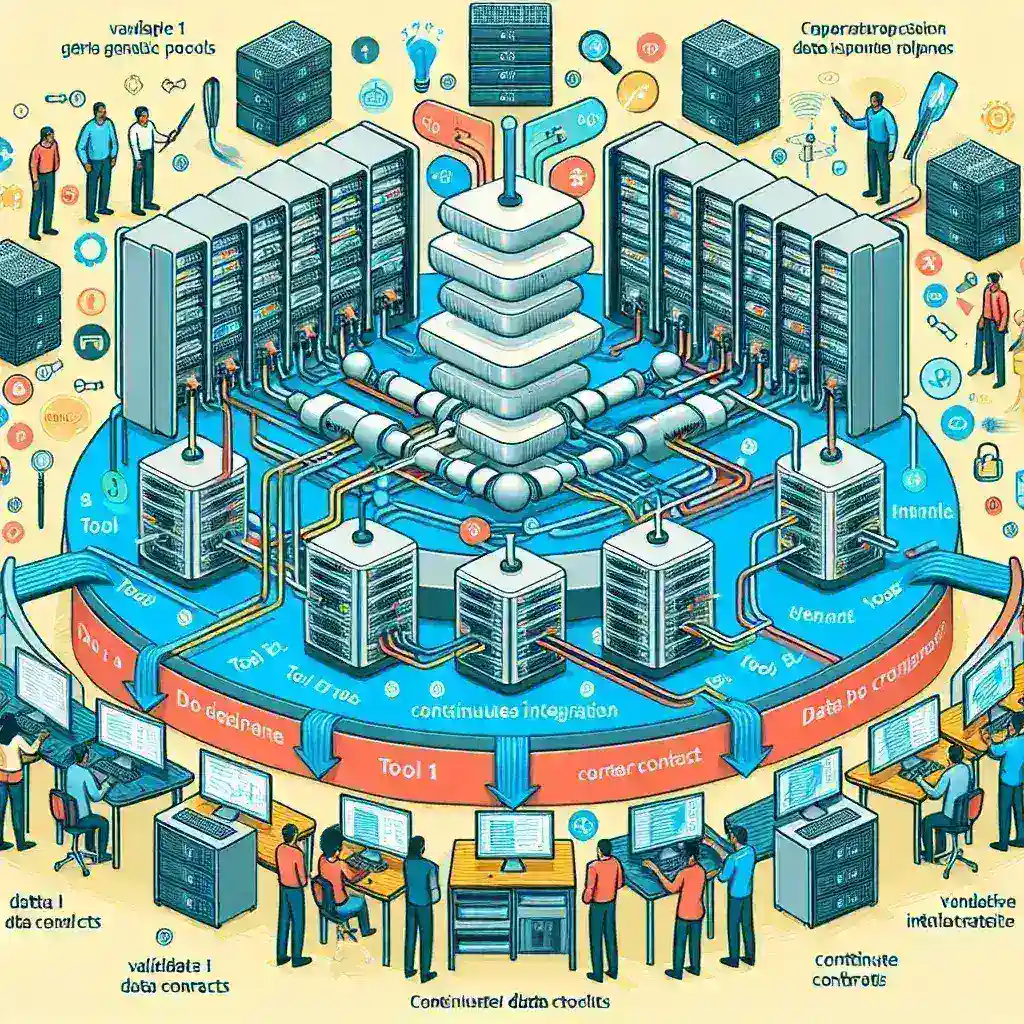
In today’s data-driven landscape, organizations increasingly rely on robust data pipelines to power their analytics, machine learning models, and business intelligence systems. However, as data ecosystems grow more complex, ensuring data quality and consistency becomes a critical challenge. This is where data contract validation in Continuous Integration (CI) pipelines emerges as a game-changing solution.
Data contracts serve as formal agreements between data producers and consumers, defining the structure, format, and quality expectations of data. When integrated into CI pipelines, these contracts act as automated gatekeepers, preventing breaking changes from reaching production environments and maintaining data reliability across the entire organization.
Understanding Data Contract Validation in CI Pipelines
Data contract validation represents a paradigm shift from reactive to proactive data quality management. Traditional approaches often discover data issues after they’ve already impacted downstream systems, leading to costly debugging sessions and potential business disruptions. By incorporating validation directly into CI pipelines, teams can catch schema changes, data type mismatches, and quality violations before they propagate through the system.
The integration of data contract validation into CI workflows follows familiar software development practices. Just as code changes undergo automated testing before deployment, data changes now undergo validation against predefined contracts. This approach ensures that data modifications align with consumer expectations and maintain backward compatibility whenever possible.
Essential Features of Data Contract Validation Tools
When evaluating tools for data contract validation in CI pipelines, several key features distinguish effective solutions from basic alternatives. Schema evolution management stands as perhaps the most critical capability, allowing teams to handle inevitable changes in data structure while maintaining compatibility with existing consumers.
Effective validation tools must provide comprehensive data quality checks beyond simple schema validation. These include null value constraints, data type verification, range validations, and custom business logic rules. The ability to define and enforce these rules programmatically ensures consistent data quality across all pipeline stages.
Integration capabilities represent another crucial consideration. The best tools seamlessly integrate with popular CI/CD platforms like Jenkins, GitLab CI, GitHub Actions, and Azure DevOps. They should also support various data storage formats and systems, from traditional databases to modern data lakes and streaming platforms.
Top-Tier Data Contract Validation Solutions
Great Expectations
Great Expectations has emerged as a leading open-source solution for data validation and profiling. Its strength lies in its extensive library of built-in expectations and the ability to create custom validation rules. The tool integrates well with CI pipelines through its command-line interface and supports various data sources including Pandas DataFrames, SQL databases, and Spark.
The platform’s data documentation capabilities automatically generate human-readable validation reports, making it easier for teams to understand data quality issues and track improvements over time. Its checkpoint system allows for flexible validation workflows that can be tailored to specific pipeline requirements.
Apache Griffin
Developed by eBay and now part of the Apache Software Foundation, Griffin focuses on data quality management for big data environments. It provides comprehensive data profiling, data quality measurement, and data lineage tracking capabilities. Griffin’s strength lies in its ability to handle large-scale data processing scenarios common in enterprise environments.
The tool supports both batch and streaming data validation, making it suitable for organizations with diverse data processing requirements. Its integration with Apache Hadoop ecosystem tools ensures seamless operation within existing big data infrastructures.
Soda Core
Soda Core represents a modern approach to data contract validation with its SQL-based configuration language. This design choice makes it particularly accessible to data analysts and engineers who are already familiar with SQL syntax. The tool supports automated data quality monitoring and can be easily integrated into CI/CD pipelines.
One of Soda Core’s standout features is its cloud-native architecture, which provides scalable validation capabilities for organizations of all sizes. The platform’s monitoring dashboard offers real-time visibility into data quality metrics and validation results.
Monte Carlo
Monte Carlo takes a machine learning-driven approach to data contract validation and data observability. The platform automatically learns normal data patterns and detects anomalies that might indicate contract violations or data quality issues. This approach reduces the manual effort required to define validation rules while providing comprehensive coverage.
The tool’s integration capabilities extend beyond traditional CI/CD platforms to include popular data orchestration tools like Airflow and Prefect. Its anomaly detection algorithms can identify subtle data quality issues that might be missed by rule-based validation systems.
Implementation Strategies and Best Practices
Successfully implementing data contract validation in CI pipelines requires careful planning and adherence to established best practices. Start with critical data paths by identifying the most important data flows in your organization and implementing validation for these first. This approach ensures maximum impact while allowing teams to gain experience with the chosen tools.
Establish clear validation criteria that balance thoroughness with performance. Overly complex validation rules can slow down CI pipelines and create bottlenecks in the development process. Focus on validations that catch the most common and impactful data quality issues while maintaining reasonable execution times.
Create a feedback loop between data producers and consumers to continuously improve contract definitions. Regular review sessions help identify gaps in current validations and opportunities for enhancement. This collaborative approach ensures that contracts remain relevant and effective as data requirements evolve.
Overcoming Common Implementation Challenges
Organizations often encounter several challenges when implementing data contract validation in CI pipelines. Performance concerns frequently arise, particularly when dealing with large datasets or complex validation rules. Address these by implementing sampling strategies for large datasets and optimizing validation logic for efficiency.
Cultural resistance can emerge from teams accustomed to less structured data management approaches. Overcome this by demonstrating quick wins and highlighting how validation prevents time-consuming debugging sessions. Training programs and gradual rollouts help teams adapt to new workflows without overwhelming them.
Managing schema evolution presents ongoing challenges as business requirements change. Establish clear processes for proposing, reviewing, and implementing contract changes. Version control systems should track contract modifications alongside code changes, ensuring full traceability of data structure evolution.
Measuring Success and ROI
Quantifying the benefits of data contract validation requires establishing appropriate metrics and monitoring systems. Track data quality incidents before and after implementation to demonstrate the reduction in production issues. Monitor time to resolution for data-related problems, as early detection typically leads to faster fixes.
Measure developer productivity by tracking time spent on data debugging versus feature development. Successful implementations typically show increased time allocated to value-adding activities as data quality issues become less frequent and easier to resolve.
Consider the business impact of improved data reliability, including more accurate analytics, better decision-making, and increased confidence in automated systems. While these benefits may be difficult to quantify directly, they often represent the most significant value derived from robust data contract validation.
Future Trends and Considerations
The field of data contract validation continues to evolve rapidly, with several trends shaping its future direction. AI-powered validation is becoming more sophisticated, with machine learning algorithms capable of detecting complex patterns and anomalies that traditional rule-based systems might miss.
Real-time validation capabilities are expanding beyond batch processing to support streaming data scenarios. This evolution enables organizations to catch data quality issues as they occur, rather than waiting for scheduled validation runs.
Integration with data mesh architectures represents another significant trend, as organizations adopt decentralized data management approaches. Validation tools are adapting to support domain-specific data contracts while maintaining organization-wide quality standards.
Selecting the Right Tool for Your Organization
Choosing the optimal data contract validation tool depends on several organizational factors. Consider your existing technology stack and ensure compatibility with current CI/CD platforms and data infrastructure. Evaluate the technical expertise of your team and select tools that align with their skill sets and preferences.
Assess your scale requirements, both current and projected. Some tools excel in small to medium environments while others are designed for enterprise-scale deployments. Consider licensing costs and ongoing maintenance requirements when making your decision.
The implementation of data contract validation in CI pipelines represents a fundamental shift toward proactive data quality management. By selecting appropriate tools and following established best practices, organizations can significantly improve data reliability while reducing the time and effort spent on data quality issues. As the data landscape continues to evolve, these validation capabilities will become increasingly critical for maintaining competitive advantage in data-driven markets.
Success in this domain requires not just the right tools, but also organizational commitment to data quality culture and continuous improvement. Teams that embrace these principles while leveraging powerful validation tools will find themselves better positioned to deliver reliable, high-quality data products that drive business value and enable informed decision-making across their organizations.
Leave a Reply